
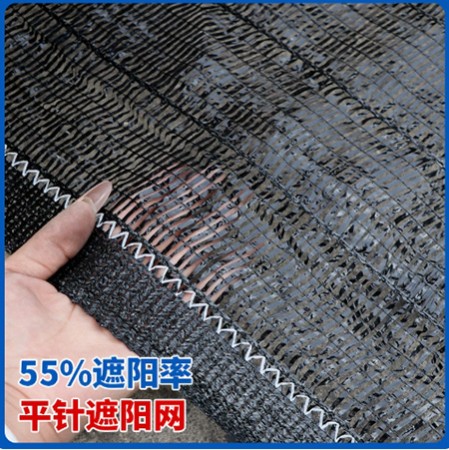
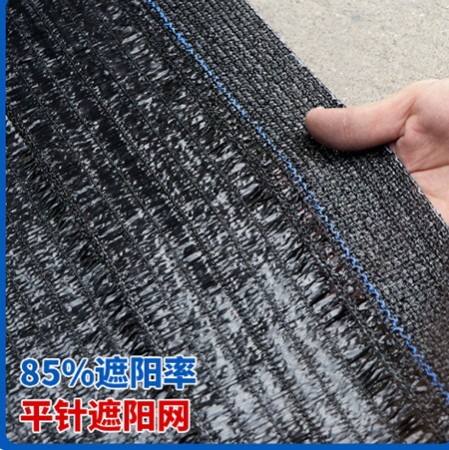
The flat-knitted sunshade net, also known as the flat-stitch sunshade net, is woven using a plain weave process with warp and weft flat threads (or round flat threads), similar to the weaving structure of bamboo mats. It is a commonly used shading material in greenhouse, mushroom, and Chinese herbal medicine cultivation, according to Tiktok Encyclopedia.
✅ The main raw material is brand-new HDPE (high-density polyethylene), with the addition of UV stabilizers and anti-aging agents. Recycled materials have a shorter lifespan and are generally not recommended for long-term outdoor projects.
✅ Core Features:
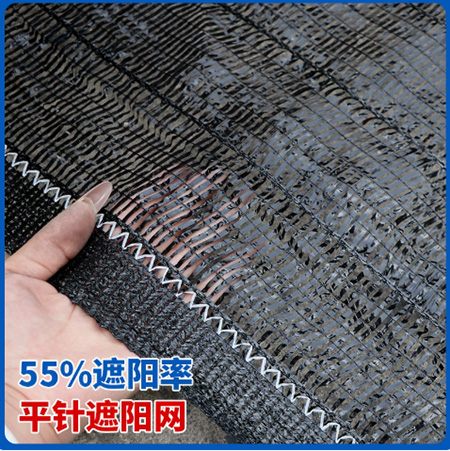
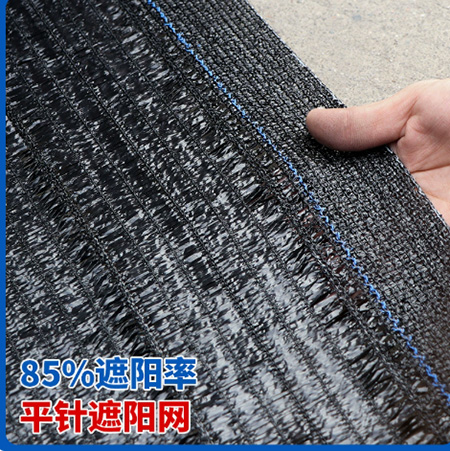
The net surface is flat, providing even shading with regular mesh holes, making it less prone to local light leakage. The shading rate is controllable, making it suitable for crops that require high consistency in lighting conditions.
With the same shading rate, it has a lighter weight, reducing the load on the greenhouse frame. The structure is tight, with no slipping of wires, good tensile and tear resistance, stable dimensions, and low shrinkage rate.
It is ventilated and breathable, allowing air circulation while providing shade, making the interior of the greenhouse less prone to stuffiness and dampness.
It can be made in large widths, with a single width of up to 20 meters, reducing splicing gaps and lowering construction costs. The edges can be wrapped and reinforced with ropes for easy installation and fixation.
It is resistant to acid and alkali, and can withstand rain exposure, ensuring outdoor use for 3-5 years with new materials.
✅ Standard specifications
Shading rate: 30% to 95% (50%, 70%, 75%, 85%, 90%, 95% are mainstream)
Color: black (high shading and cooling), dark green, silver gray (reflective and heat-insulating)
Width: 2m, 4m, 6m, 8m, 10m, 12m, customizable width Grammage: 40–125g/㎡
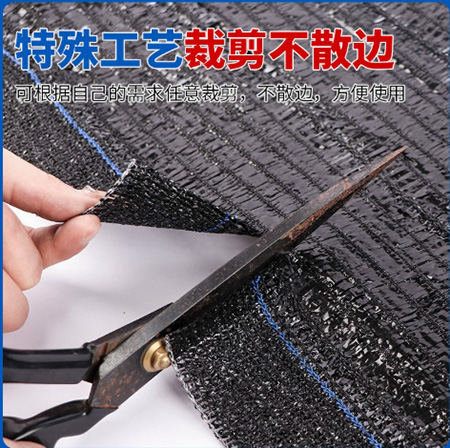
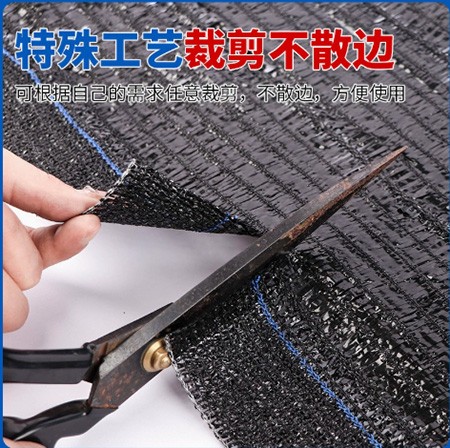
Packaging: roll-packed, can be cut to length, punched, and edged according to customer requirements
✅ Main applications
Agriculture: mushroom greenhouse, orchid/Chinese herbal medicine, vegetable seedling cultivation, fruit tree sun protection, greenhouse roof shading;
Livestock farming: livestock and poultry shed cooling and shading;
Engineering: dust prevention on construction sites, shading on open storage yards, shading on sports fields/courtyards;
Horticulture: nursery, succulents, flower shading.
✨ A simple comparison between flat-knitted (warp-knitted) and needle-knitted sunshade nets: Flat-knitted: The net surface is flat, shading is even, and it is lighter with the same shading rate, suitable for precision planting (mushrooms, medicinal herbs); Needle-knitted: It has high elasticity and obvious mesh holes, and is mostly used for short-term covering in ordinary fields.


